Repairs, Gas & Costs · Updated November 2026 · By the Free Car Help team
Key takeaways
- Most expensive breakdowns start as small, cheap problems.
- A 10-minute monthly check catches tire, fluid and light problems early.
- Nonprofit garages and community colleges offer low-cost inspections.
Monthly checks
- Tire pressure and tread
- Oil level and color
- Lights and wipers
- Coolant and washer fluid
Regular service
- Oil change on schedule
- Brake inspection once a year
- Battery test before winter
Low-cost help
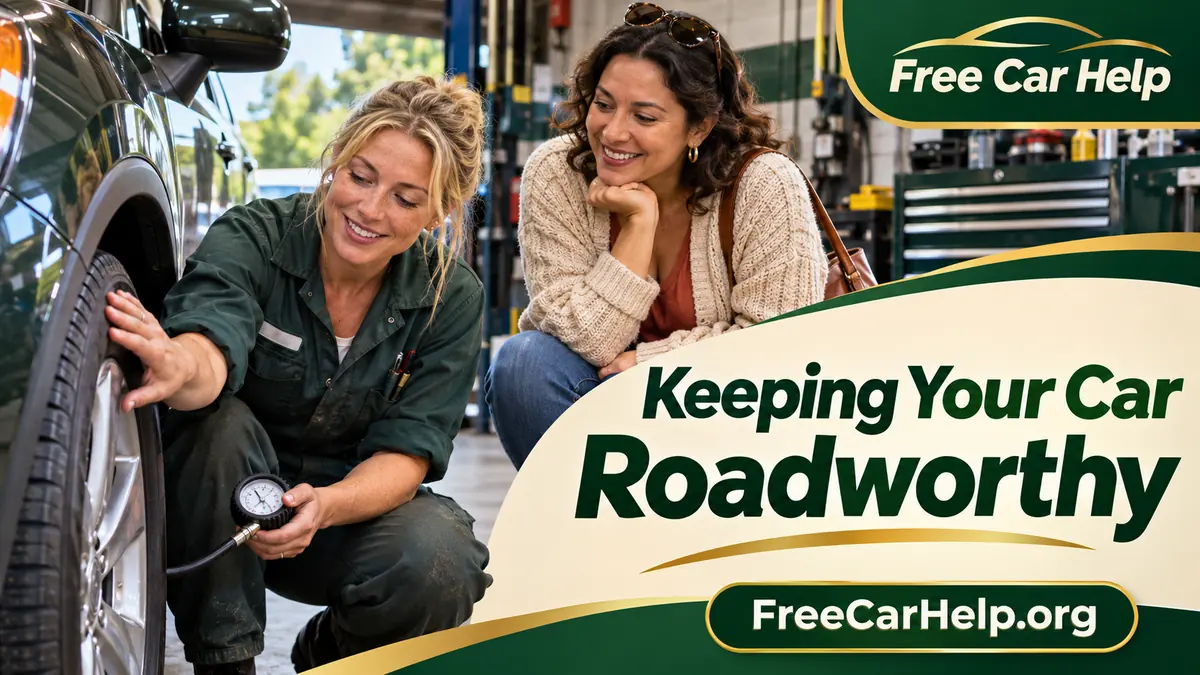
Nonprofit garages offer free inspections and fair prices. Community colleges with auto programs sometimes do low-cost repairs. If something breaks, see car repair assistance.
Warning signs you should not ignore
- Squealing or grinding brakes — worn pads are cheap; damaged rotors are not.
- Check engine light — many auto parts stores read the code for free.
- Temperature gauge rising — pull over; overheating can destroy an engine.
- Dashboard battery light or slow starts — test the battery before winter.
- Uneven tire wear or vibration — an alignment costs far less than new tires.
A simple yearly car maintenance budget
Set aside a small amount every month for maintenance — even $25–$40 adds up to cover oil changes, wipers, a tire rotation and a battery over a year. Families who budget for routine care are less likely to need emergency car repair assistance.
Free and low-cost car care resources
- Free code reads and battery tests at many auto parts stores.
- Low-cost service at community college automotive programs.
- Nonprofit garages such as The Lift Garage in Minnesota and Hands of the Carpenter in Colorado.
- Church car ministries that offer free oil changes and inspections.
Frequently asked questions
How can I get my car fixed for free?
Some charities, church ministries and TANF programs pay for essential repairs. Start with 211 and our car repair assistance page.
How often should I change my oil?
Follow your owner’s manual. Many newer cars go 5,000–10,000 miles between changes; older cars may need more frequent service.
What maintenance matters most on an old car?
Tires, brakes, oil, coolant and the battery. Keeping these in good shape prevents most breakdowns.